Country Rock
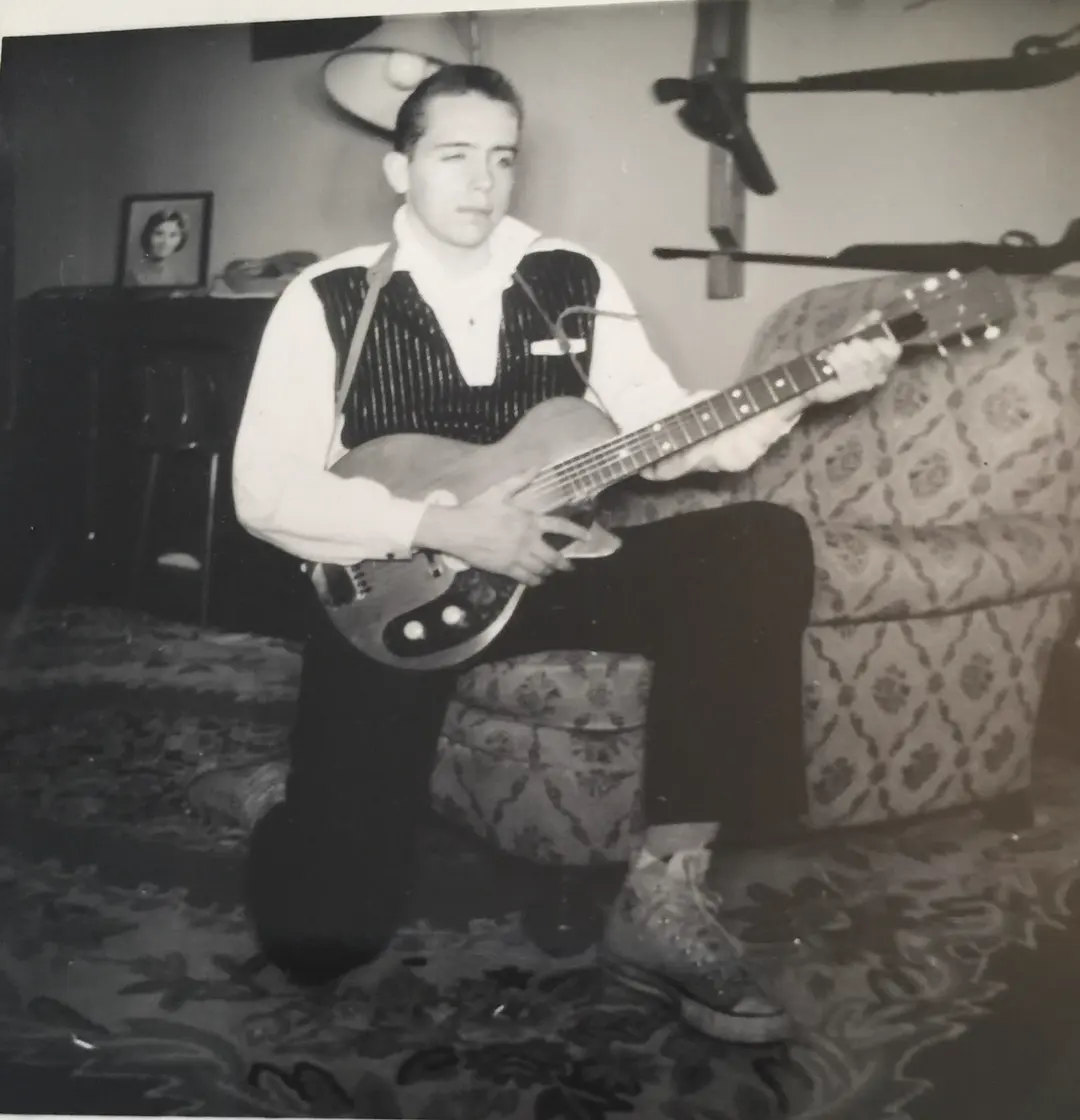
He played lead guitar for a pair of Connecticut rock bands, the Dynamics and the Roadrunners. He studied business at the University of Connecticut. Those two facts sit side by side in the Courant's 1992 profile, offered as the explanation for everything that came after. Karaoke, the paper wrote, was a natural blend of both backgrounds.
The music was New England country rock. That distinction matters more than it looks. It is not what the rooms playing standards were booking, and it is the sound that put him in the rooms that mattered.
The list the paper did not have room for
Two bands was about a fifth of it. Before the Dynamics there were the Chevrons and the Magnums, both formed at Pennsylvania Military College. He joined the Dynamics while on leave in 1961, and rejoined them after college. In between, in Buena Vista, Virginia, he played in Roy Painter's band.
Later came Gil Deschine and the Star Rockets, which ended the way almost nothing ends: Gil won $100,000 in the lottery. After that he joined Claude Lamy and the Roadrunners, and played lead guitar with them for over thirty-five years — the longest-running thing in his working life, and not mentioned in a single published account of him.
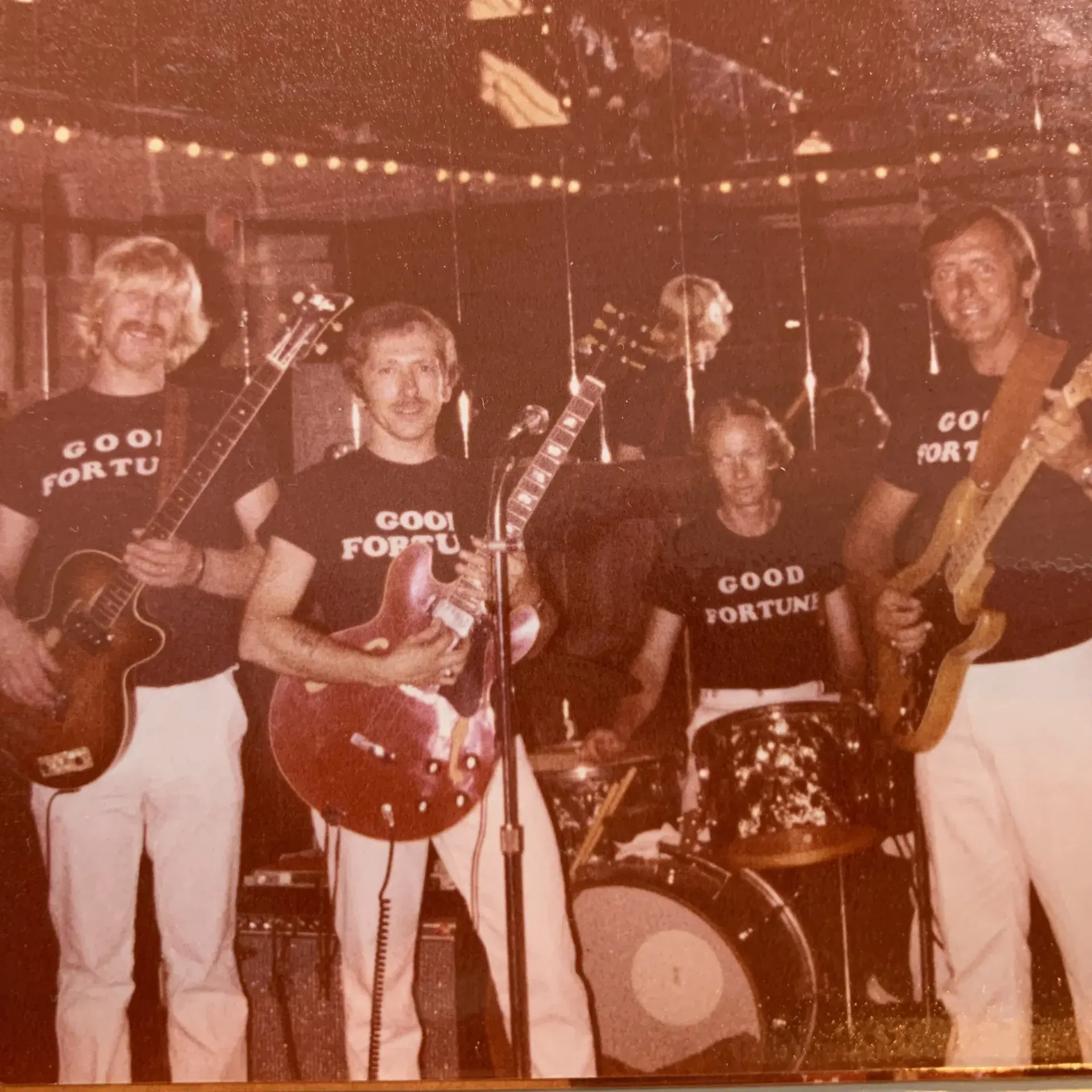
Along the way he also played with Good Fortune, Roger Mac, After Hours and "The Reason Why."
The Music Box
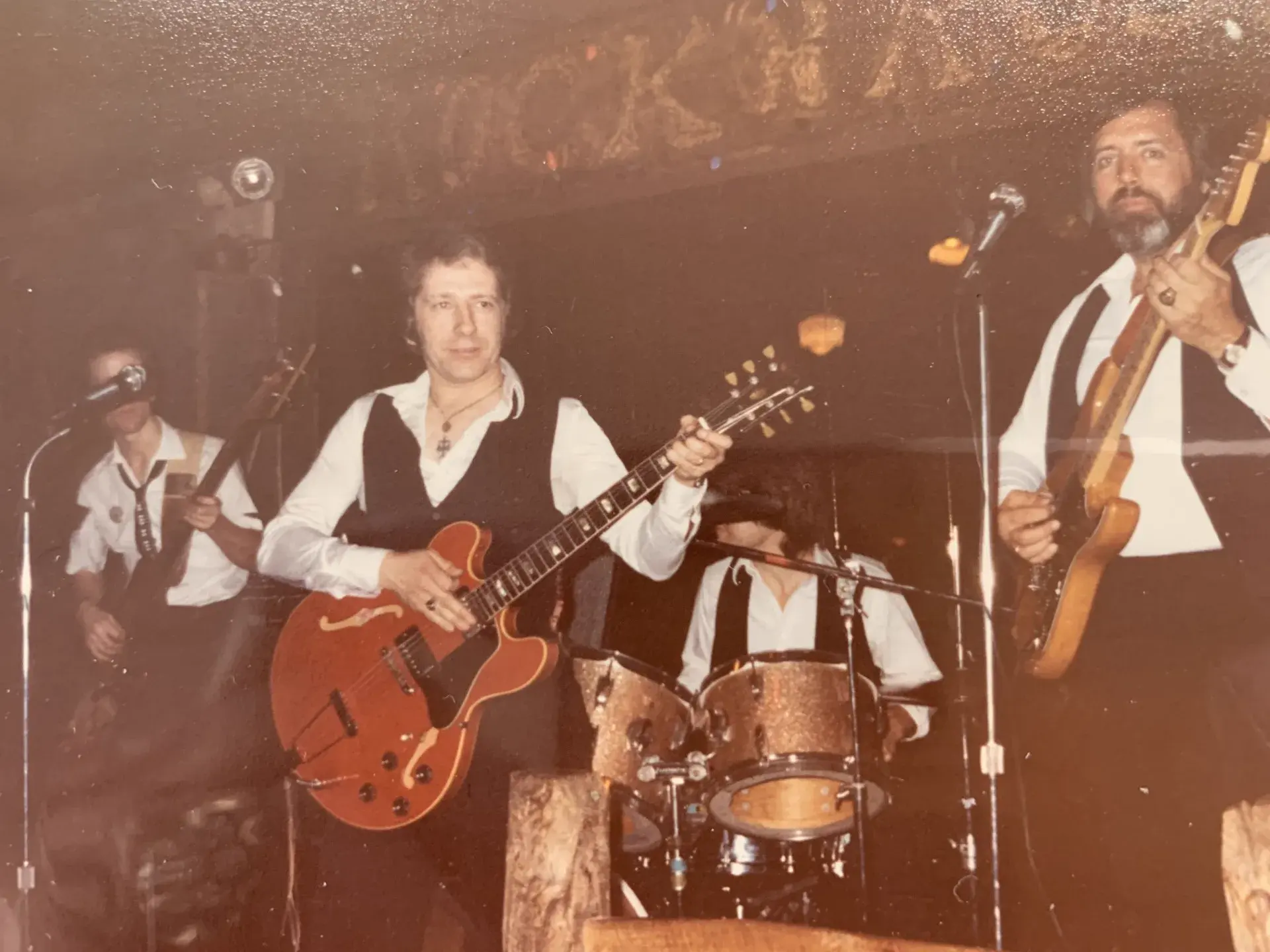
The Music Box, later renamed Beverly's, was one of them — a serious Connecticut live-music room booking contemporary country rock while other places were still working through the standards. It had a proper room: age checks at the door, a VIP section, and a caged service area for drinks.
He played it. One of the photographs in this chapter was taken there.
He tells the rest of that story himself. The owner was Beverly Digmus, the place stood on Bantam Lake in Litchfield, and the space he talked her into opening up for the band was the roller-skating rink inside it, shut since she had bought the building. In his words it became the only place in Connecticut that you could go out at night and listen to live Rock and Roll music.
He was about twenty-one, and he had just opened a venue by persuading somebody to unlock a room they had written off.
1962: the Stratocaster that didn't work out
In 1962 he went to a music shop in Philadelphia that was running 40% off, and came out with a white Fender Stratocaster. He could never get the intonation right on it — the fault that makes a guitar useless to a working player and invisible to everyone else in the room — so he bought his first Fender Telecaster instead.
A small purchase with a very long shadow. Twelve years later a friend would ring him about a pink one.
The circuit
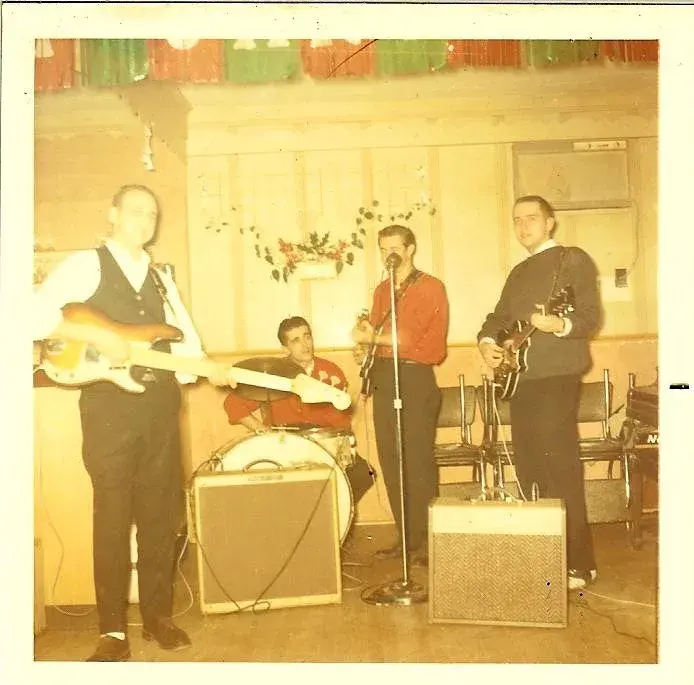
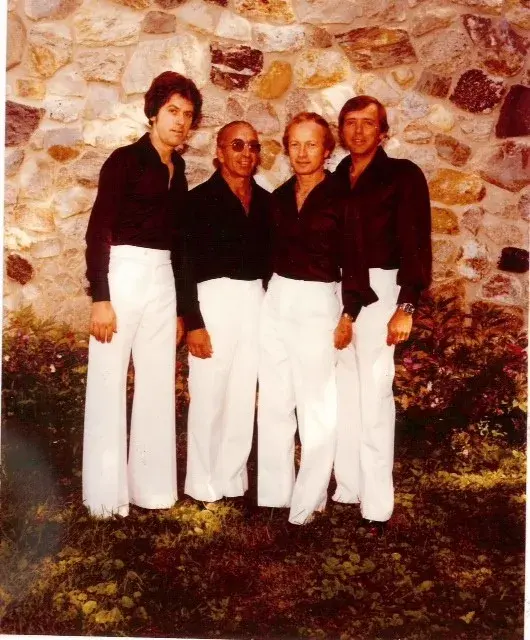
The rest of these years look like working-band nights, not stadiums. A hall dressed for the holidays. Festoon lights over a stage and a five-piece in matching shirts. Function rooms, clubs, holiday dances.
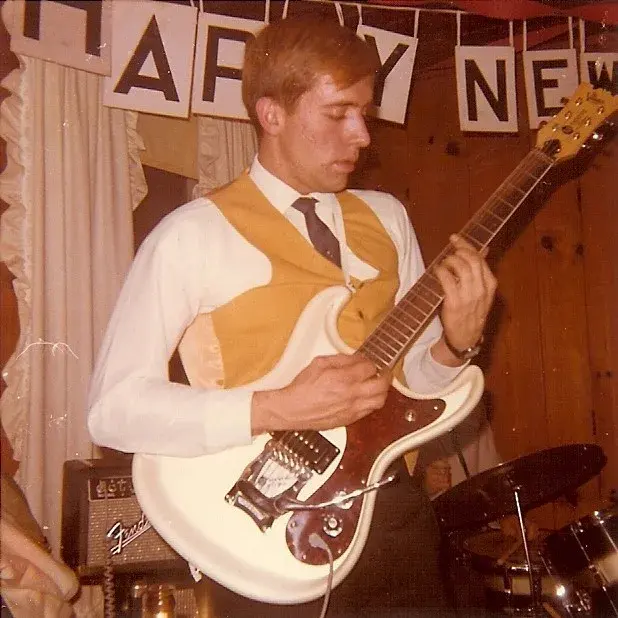
One of them is a New Year's Eve party in Copake, New York, and the guitar in that frame is a Mosrite — not the Fender it was captioned as until he corrected it.
It is the same circuit the Airstream would drive out to twenty years on.