The Elvis Airstream
This is the part of the story that sounds invented and isn't.
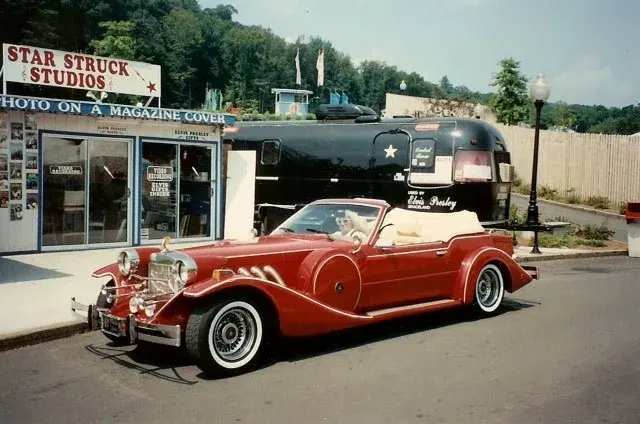
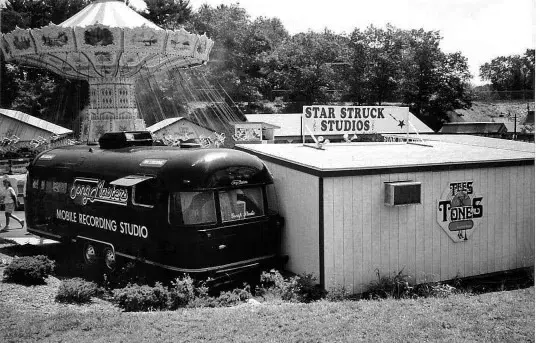
In 1984, Graham and Bonnie Nicholson bought a 35-foot 1973 Airstream trailer that Elvis Presley had converted into a recording studio. They paid $25,000 for it. It came out of a Memphis amusement park — not, as has been printed, out of Graceland.
They towed it to Lake Compounce, the amusement park in Bristol, and opened it as Star Struck Studios. The trailer's own flank read MOBILE RECORDING STUDIO, and that is what it was: a recording booth, not a karaoke booth. You went in and cut something, and you came out holding a cassette of your own performance. The hut beside it advertised a photo on a magazine cover.
That cassette is the whole idea in miniature. Not a screen, not a scoreboard — you got to keep it.
The karaoke came with them on the road. Cassette tapes and lyric sheets — no screens, no wipes, just a backing track and the words on paper. Fairs at Goshen, Berlin and Terryville. Clubs, including the Juke Box on the Berlin Turnpike and the rather more upscale Litchfield Inn. Then college shows, the first at Holy Cross in Worcester.
Wherever they took it, he says, it was a hit.
Bonnie
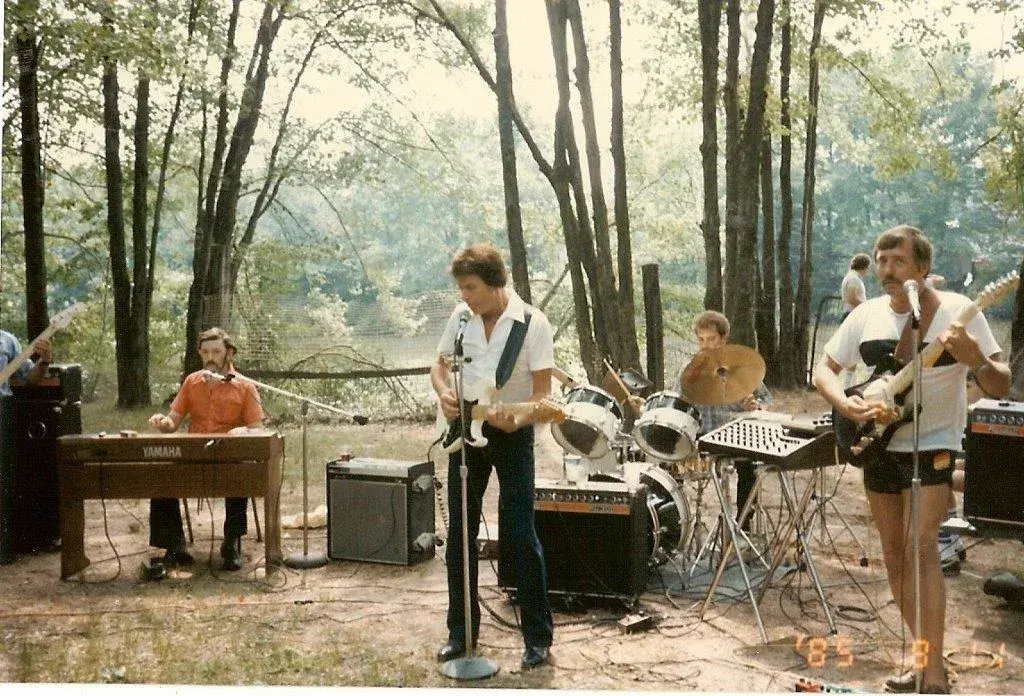
He met her in these years — forty-two years ago, at a club where his band was playing.
She walked up to him and asked to buy him a drink. That was the first conversation. The first date followed, at a room called the Hall of Fame — a detail that turns out to matter enormously eight years later.
They married on 14 June 1986. She is Bonnie Griffin.
Everything downstream of it begins there: the re-mortgaged house, America's first full-time karaoke restaurant, the country dance hall off Interstate 84, and eventually a boat with both their names on the crew shirts. Decades later he would build an entire business on giving strangers the same three minutes — the small, unrepeatable moment where somebody walks up to somebody else and something starts.
He explains it in a way that sounds less like a business plan than a memory.
Meanwhile
Throughout, both of them kept their day jobs. She was still on the assembly line at Stanley Works. He was still selling ceramics for Kyocera. The empty orchestra was a nights-and-weekends operation being hauled behind a car, and the mortgage was riding on it.
By 1989 they stopped hauling and opened a room of their own.