The Chevrons
He picked up a guitar for the first time in a bedroom in Litchfield, around 1959. Before that he played the mandolin.
That is where this starts — not on a stage, not in a band, in a room in a house in Litchfield with an instrument he had not played before.
He had come to Litchfield at seventeen — born in Brooklyn in 1940, by way of Wantagh and a high-school football field. He bused tables at the Westleigh Inn, drove a laundry truck and a dry-cleaning truck, finished high school and gave UConn a year. Then the music found him.
And before the mandolin there were three more. It started in high school with the violin, in the school orchestra, and an invitation to the All-New England Choir. Then the piano, which nobody taught him: his sister was the one taking lessons, and one afternoon he came in from football practice, sat down at it for the first time and played "I Hear You Knocking", the Smiley Lewis record. She could not believe it, and she quit her lessons. The mandolin came at UConn in 1959, where he roomed with Tom Bosse and started writing songs.
The guitar arrived by accident, in the most literal sense. In July 1959 he was in a near-fatal car crash. He had applied to the Naval Academy, and was turned down on a physical injury the crash had caused. While he was recovering from it, he borrowed a guitar and taught himself to play. His first guitar of his own was a Magnavox.
The band was the Chevrons.
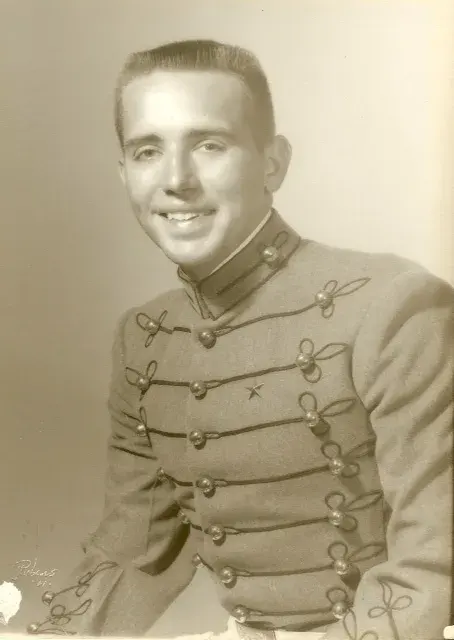
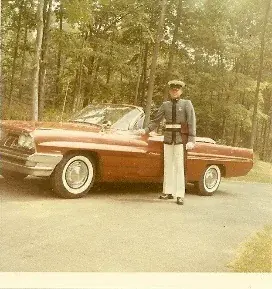
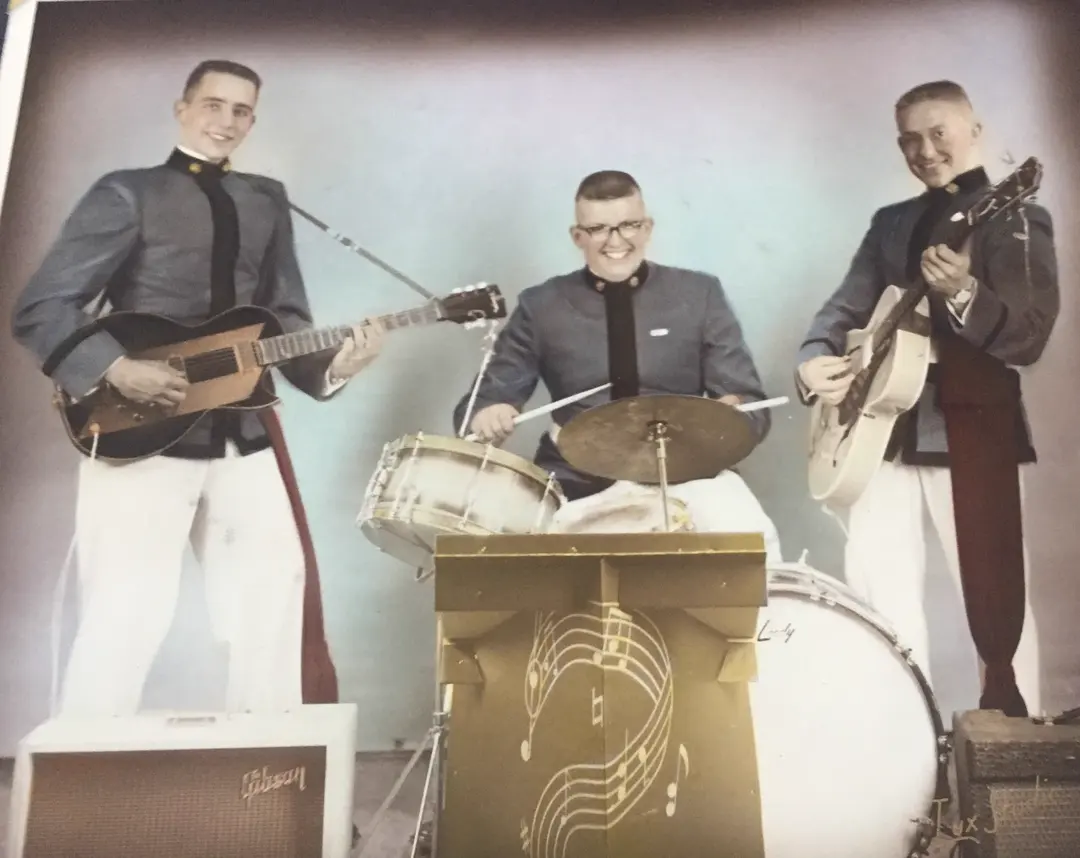
He formed it at Pennsylvania Military College, where he went instead of Annapolis and graduated in 1962 with honors — and he formed a second one there too, the Magnums. That settles what these photographs are: the military-academy dress in them is PMC.
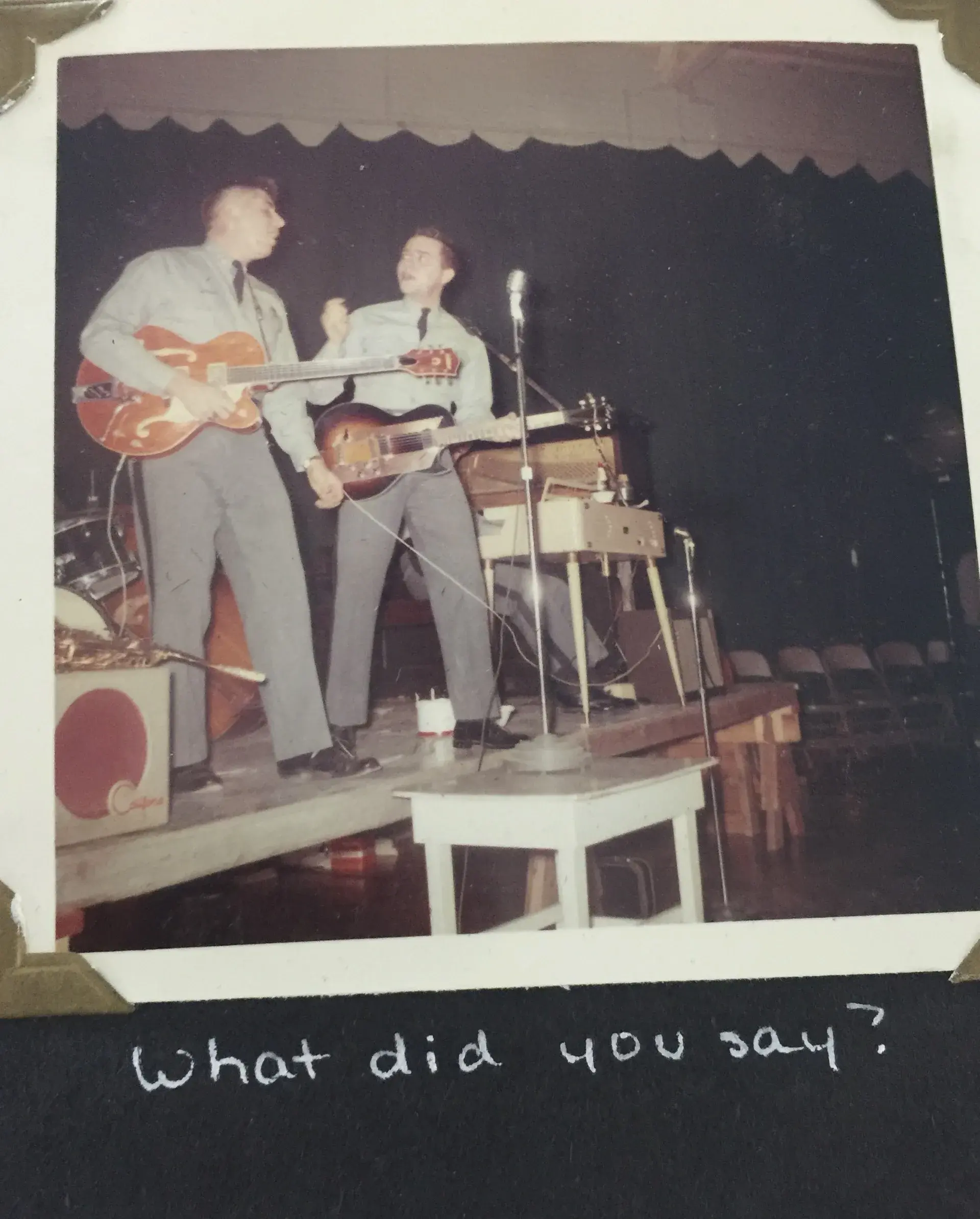
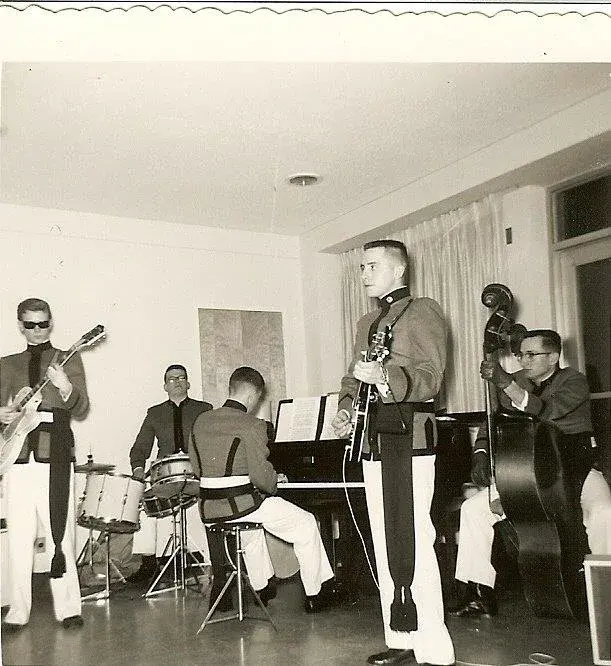
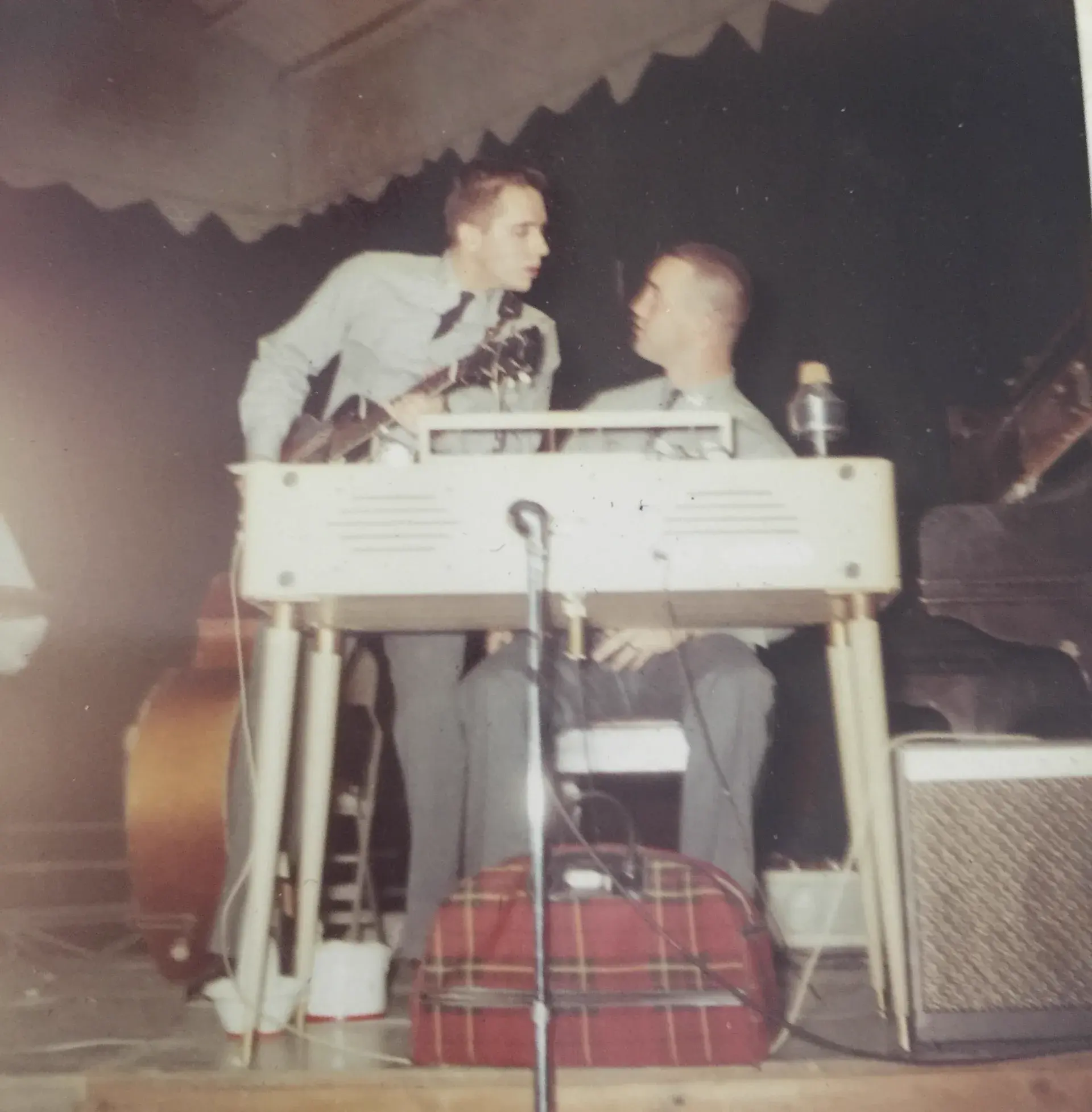
The photographs from these years show them in military-academy dress: grey tunics with shoulder tabs, white trousers, black ties. Two archtop guitars, a drum kit, a piano, an upright bass. In one, a photographer has hand-coloured the print and posed three of them behind a gold bandstand painted with a treble clef. In another, six of them work a function room, one playing in sunglasses. In a third, two of them bend over a white pedal steel guitar under a marquee, a tartan bag and an amplifier at their feet. A fourth is an album page, two guitarists in matching grey shirts leaning into a shared microphone, captioned by hand: What did you say?
No reporter ever asked about any of it. The Hartford Courant, profiling him in 1992, reached back only as far as two rock bands and a business degree.
What the photographs establish on their own is worth saying plainly. He did not pick up a guitar to start a business. He was in a working band, in uniform, reading charts off a stand, before any of the rest of it happened.
And there is the pedal steel. It is a country instrument, sitting in a marquee sometime around 1958, and it keeps turning up in his hands or beside them for the next fifty years.
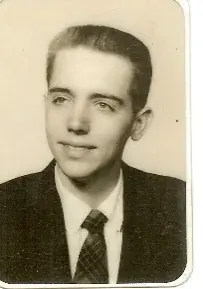
Still to settle: which figure he is in each of the band frames, and which of them are the Chevrons and which the Magnums. The dress portrait is him. The rest are unlabelled.