The Charter Years
The room he built runs on other people's voices. The boat runs on his hands. And the boats go back further than anything else in this story — further than the guitar.
Before he could drive one, he had to swim
His family summered at Moosalamoo, in Salisbury, Vermont. If he wanted to take the boat out on Lake Dunmore, he had to prove he could swim out to the raft first. The family boat was a rowboat with a 7.5-horse Scott Atwater on the back.
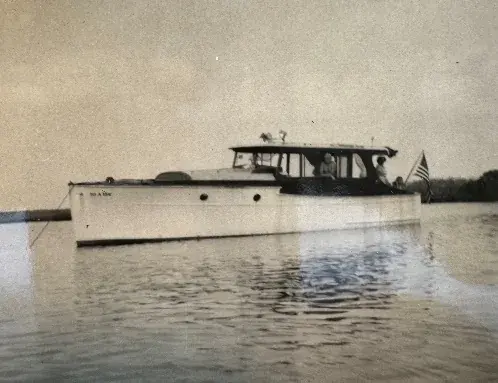
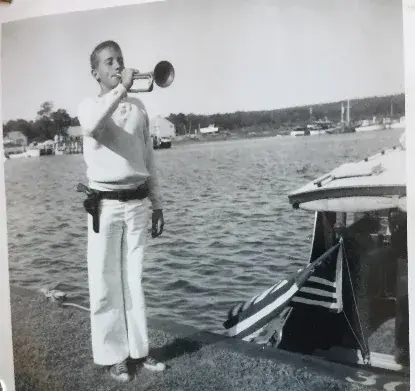
When he was twelve, the family bought a 31-foot Elco cabin cruiser named *Sumerun and docked her at the Amityville Yacht Club. He learned to run her. His own boat was rather smaller: an 8-foot Penn Yan with a 1.5-horse air-cooled outboard. The move to Connecticut in 1955 changed the family boat again, to a 16-foot ski boat with a 55-horsepower Chrysler outboard*.
In 1973, while he was still a serving Plainville police officer, he took a 22-foot Penn Yan around the Great Northern Route — about a thousand miles of river, lake and lock. That story is in The Badge, because that is where it happened.
1976: it becomes the job
When he left the department, Jack and Maureen Roberts asked him to move their 85-foot motor-sailer, the Lady Maureen, to Palm Beach, Florida.
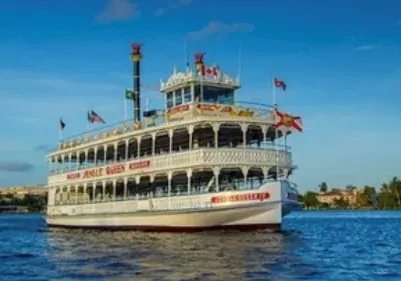
He took her down, and stayed in Florida long enough to pass the test for 100-Ton Merchant Marine Captain. Then he was hired as captain of the *Jungle Queen, the 500-passenger* tour boat.
Five hundred people. It is the same job he would do for the rest of his life in three different costumes: fill a room with strangers, take responsibility for all of them, and give them a night.
Lady of the Sea
He sold the Penn Yan and bought a 30-foot Sportcraft, and named her LADY OF THE SEA. He had her documented and took six-pack charters — six paying passengers at a time — which required a 25-ton Merchant Marine licence.
About 1977 he sold the Sportcraft and bought a 32-foot Trojan, and documented her too.
Then a run of smaller, faster boats: a 17-foot speedboat, traded for a 19-foot speedboat with a 350-horsepower Corvette engine. He took Bonnie — his girlfriend then — from Connecticut to New York City in it, navigating with a handheld compass and nothing else. After that a 24-foot pontoon at the cottage he had just bought on Highland Lake, later traded for a 22-foot Bennington with a 70-horsepower Yamaha.
"Could we really afford that?"
Then he picked up a copy of *Soundings*.
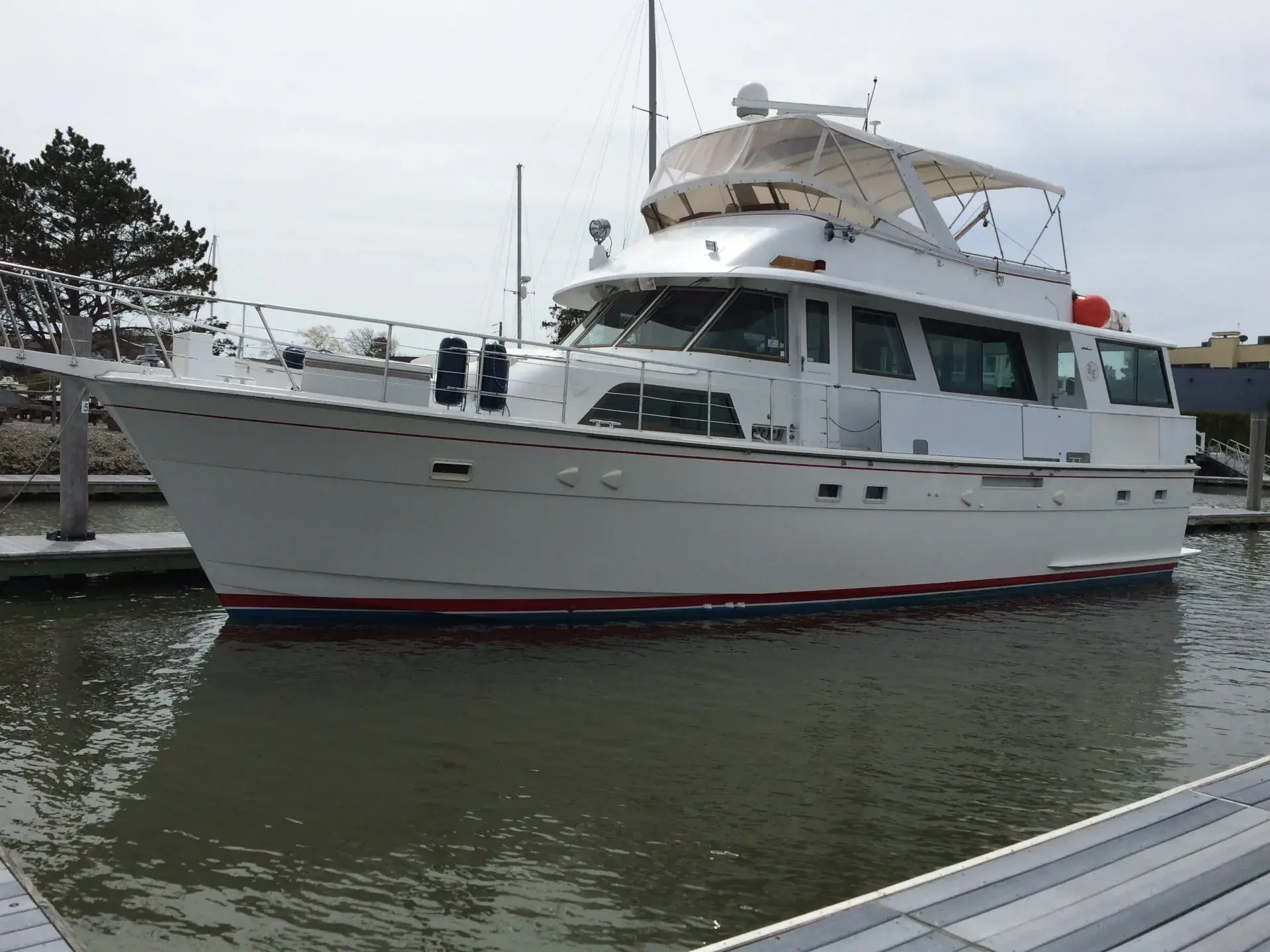
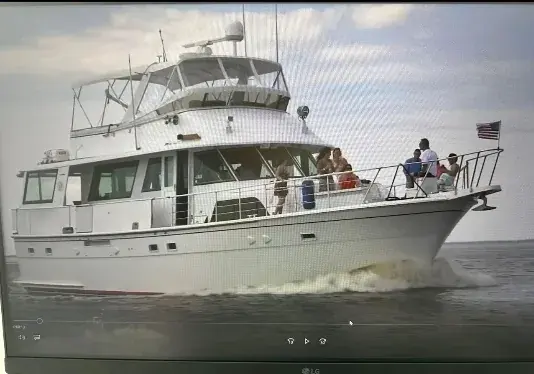
Listed in it was a 1981 Hatteras Motor Yacht, already documented for charter service. Fifty-six feet, lying at Saybrook Point Marina in Old Saybrook. Her owner and captain was Frank Rogers.
Bonnie and Graham went down and inspected her. Walking away afterwards, Bonnie asked the question anyone would have asked: could we really afford that?
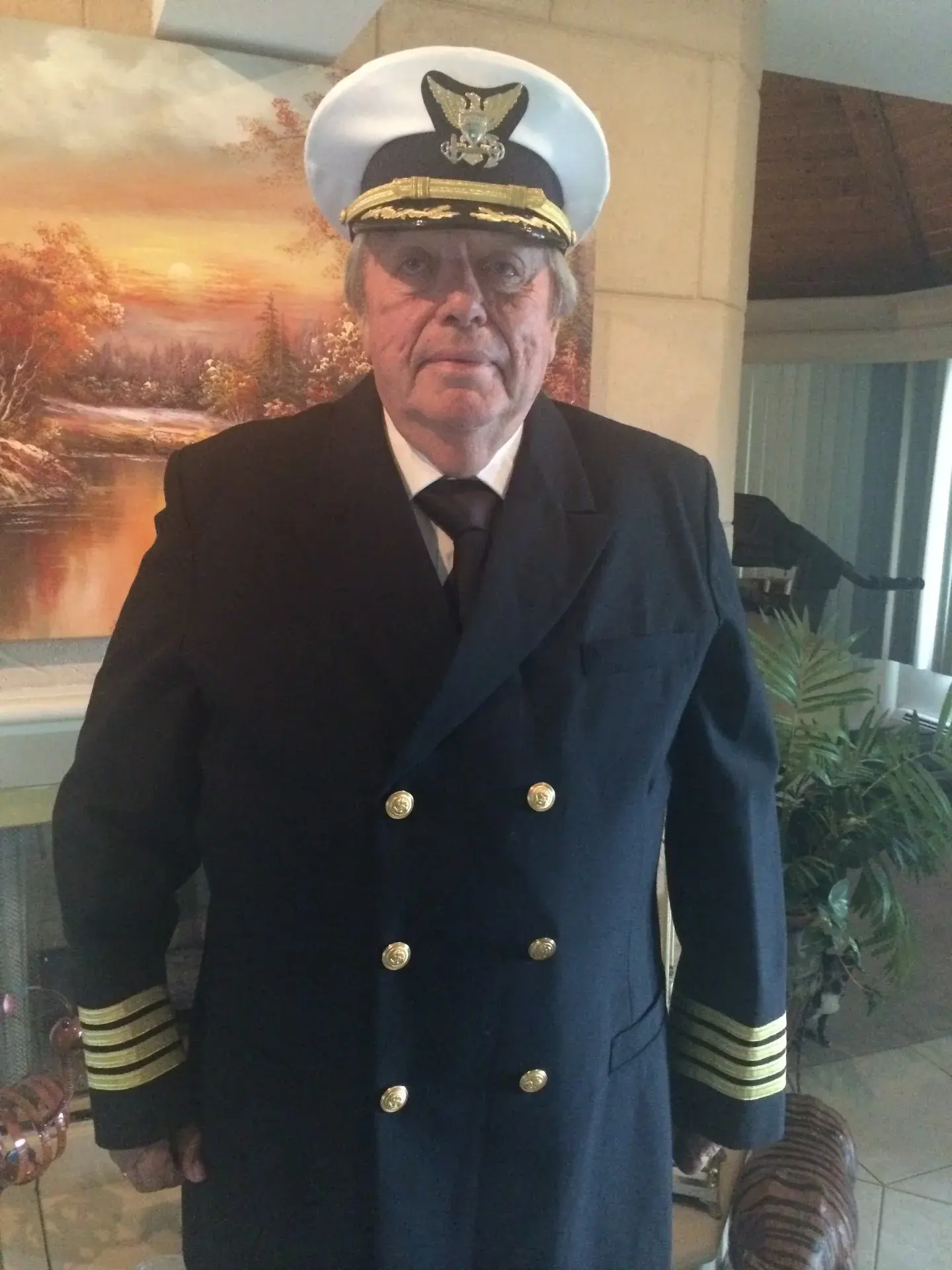
The closing was in May. Her name was REALESCAPE, and she is the boat in these photographs. He ran her as Real Escape Yacht Charters out of Stamford, owner-operator, for roughly twelve to fourteen years — carrying up to fifty people — and he retested and earned his 200-ton licence, four gold stripes at the cuff.
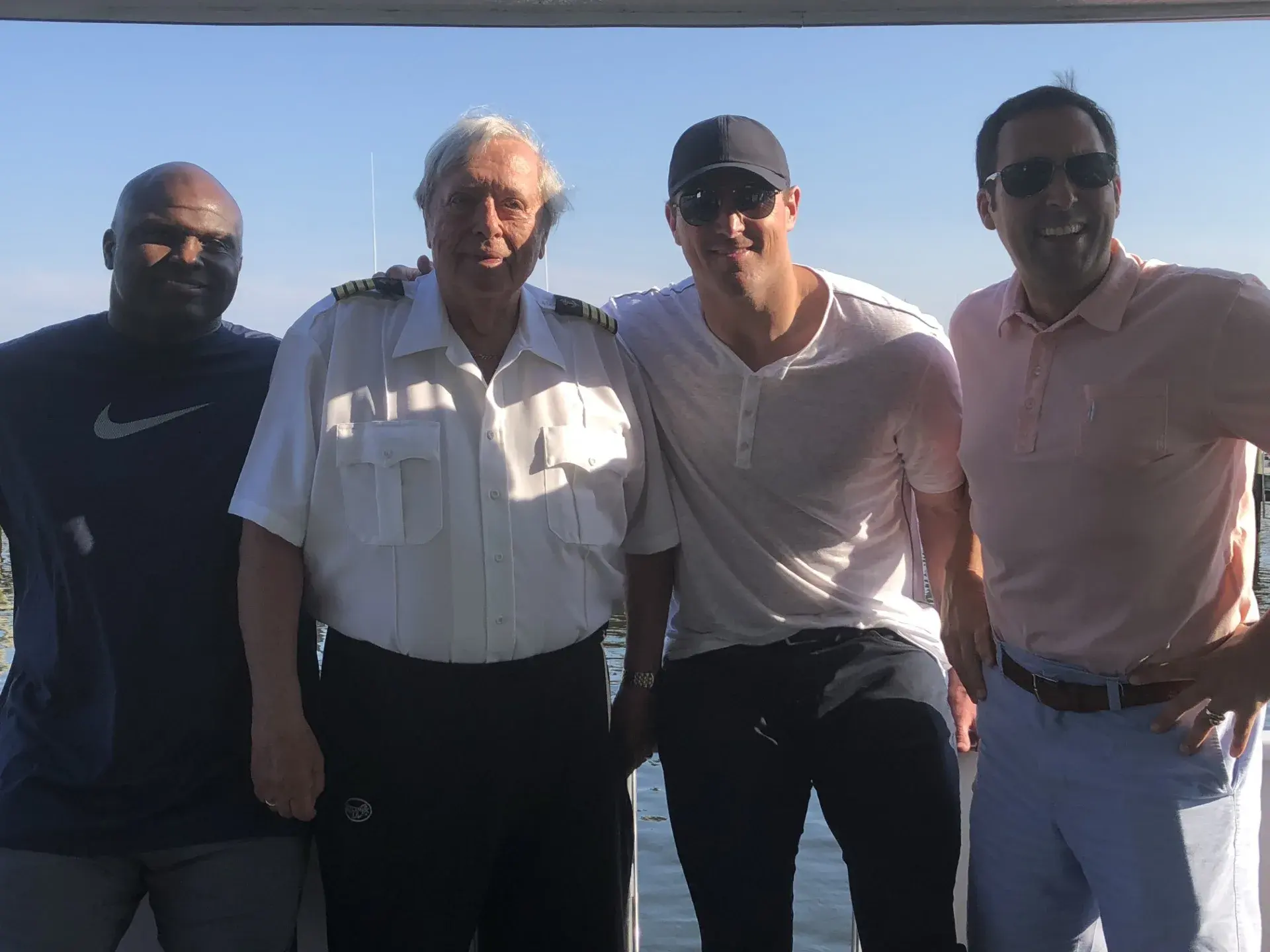
The work was not pleasure cruising. Famous people. Fundraisers. Burials at sea. Weddings. The New York City fireworks. A winter in Myrtle Beach. Connecticut River cruises. Charters in the Hamptons. A season in Stamford. A charter for United States Coast Guard graduates. And, in his own words, countless more.
The same job, on water
It is worth noticing how little the job actually changed.
He spent forty years putting a microphone in a stranger's hand and giving them three minutes in front of a room. On the water he took fifty strangers out into Long Island Sound and gave them an evening. Same instinct — build the room, then get out of the way of the people in it. There are no strangers, just friends you haven't met reads differently once you know he printed it on a dance hall and then went and did it on a boat.
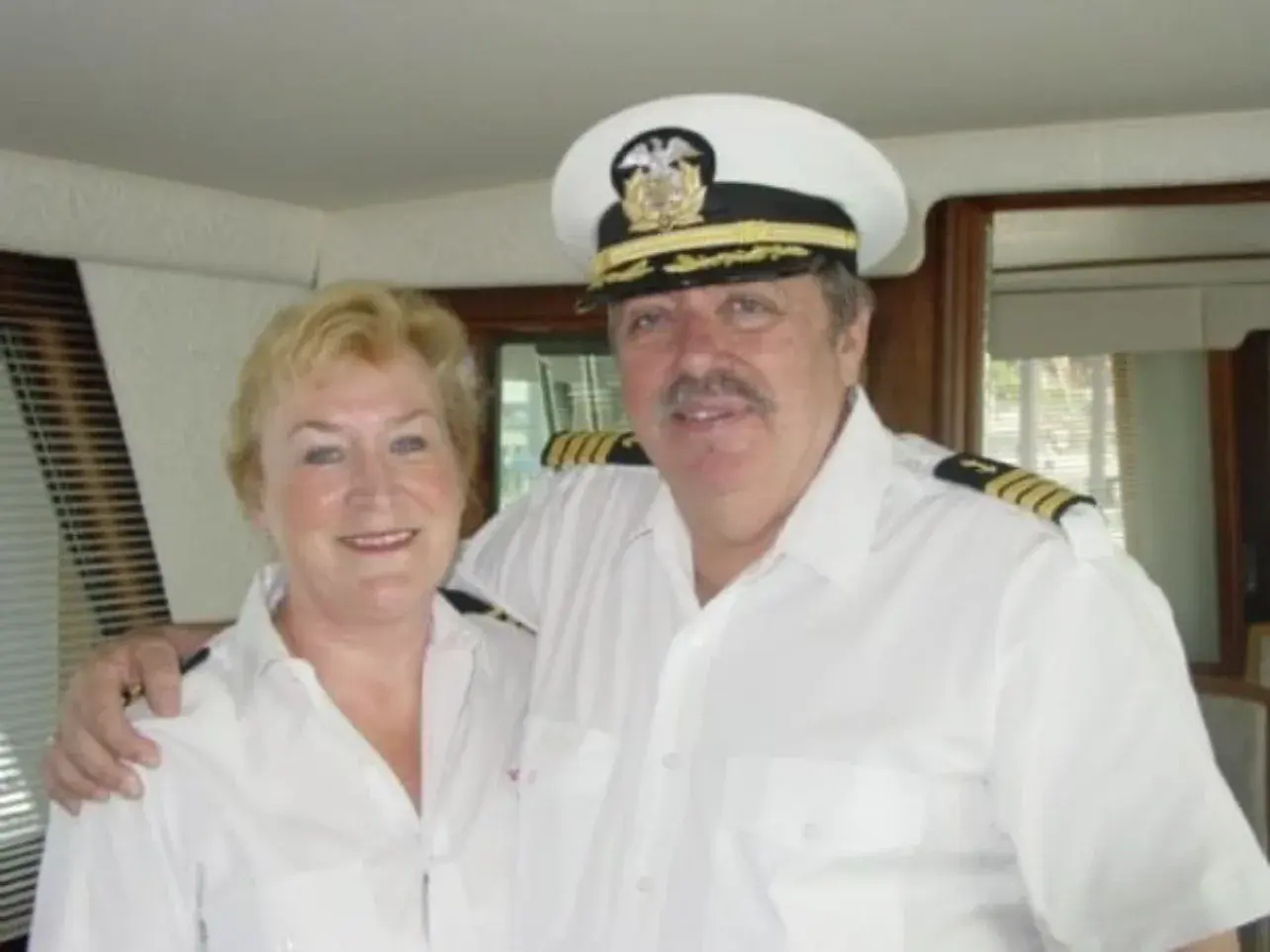
Bonnie was aboard too, in crew whites with epaulettes on the shoulders, standing beside him in the wheelhouse while he wore the peaked cap.
Coming in
The day came when he decided to retire from the charter business, and he sold REALESCAPE to a charter operation working out of Jersey City, New Jersey.
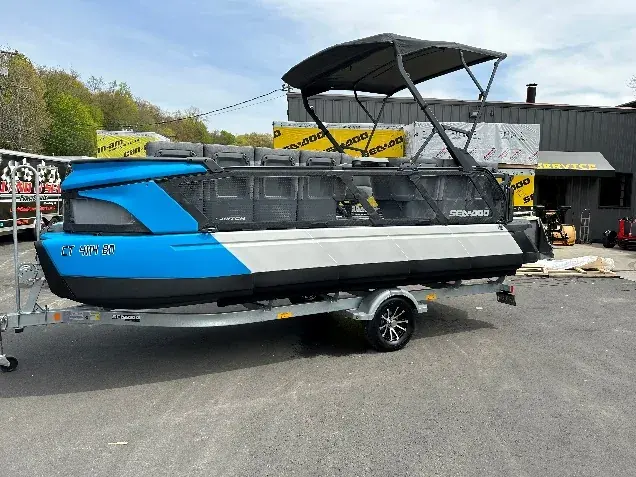
There was one more boat after her, and it is a small joke of an ending for a man who held a 200-ton ticket: a Seadoo Switch, driven by a water jet, kept at the Middletown Yacht Club. He sold it a year later.
Still to settle: the year he bought REALESCAPE and the year he came ashore — he gives the month, May, but not the year. And the order of the three licences: he passed for 100 tons in Florida after 1976, says the Lady of the Sea six-pack work needed 25 tons, and retested for 200 tons in the REALESCAPE years. A 25-ton ticket after a 100-ton one would be a step down, so one of those sits somewhere else in the order. We have not guessed at it.